
Urinary Incontinence: Understanding a Widespread Yet Overlooked Issue

What is urinary incontinence, really?
Urinary incontinence is often misunderstood or avoided in conversation, yet it affects millions of people worldwide. In simple terms, it refers to the involuntary loss of urine - a condition that can interfere with daily life and self-confidence when it happens frequently.
It’s important to distinguish this from occasional leakage, which might happen after intense laughter or a heavy workout. Incontinence becomes a medical issue when it recurs or causes discomfort or embarrassment. It can affect people of any age, and both men and women are concerned.
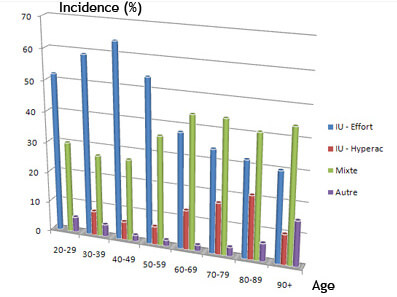
Prevalence of urinary incontinence among women by age group
How common is it among women?
Studies show that urinary incontinence is more frequent among women, and its prevalence increases with age. A large-scale study in Norway found the following:
- 12% of women aged 20 to 29 experience incontinence,
- 25% of women aged 60 to 69,
- and 32% of women over 80.
Younger women tend to suffer more from stress incontinence (leakage during physical effort), while older women more often experience urge incontinence or a mixed type that combines both forms.
What about men?
Incontinence in men is less discussed but no less important. Overactive bladder, which causes sudden urges to urinate, affects between 12% and 16% of men over 18 - with higher rates in older age groups.
Stress incontinence in men is often related to prostate surgery, especially after treatment for prostate cancer. In Belgium, thousands of men undergo prostate removal each year. Studies suggest that around 25% of them experience persistent leakage six months after surgery, and up to 5% require long-term medical care to manage the condition.
A condition that can affect all ages
Urinary incontinence is not just a concern for the elderly. It can affect young adults, women after childbirth, or anyone recovering from surgery or living with a chronic illness. Even certain medications or a stressful lifestyle can play a role.
The good news is that support and treatment exist. If you experience regular urine loss, don’t hesitate to speak with a healthcare provider. Identifying the cause early makes it easier to manage and improve your quality of life. You’re not alone - and there’s no reason to suffer in silence.
Related posts
Incontinence and aging: Anticipating the future
This article deals with incontinence in the elderly, an often taboo subject but one that is crucial to address as the...
Read More
Les bienfaits de la pratique du yoga sur l'incontinence urinaire
La pratique du yoga est plus tendance que jamais. Le yoga rencontre un succès international et est bien souvent...
Read More
Neuromodulation : une solution innovante contre l’incontinence urinaire
L’incontinence urinaire se manifeste par des fuites involontaires, en dehors de toute volonté de miction. Il s’agit...
Read More
Des plantes pour mieux vivre l’incontinence urinaire : le rôle de la phytothérapie
Il est souvent difficile de parler d’incontinence, même à son médecin. Heureusement, il existe des alternatives...
Read More
Support and assistance structures to cope with incontinence
Senup informs you about the help and support resources available in France and Belgium for people affected by...
Read More